

Are GPS Trackers Waterproof? (2026 Buyer’s Guide)
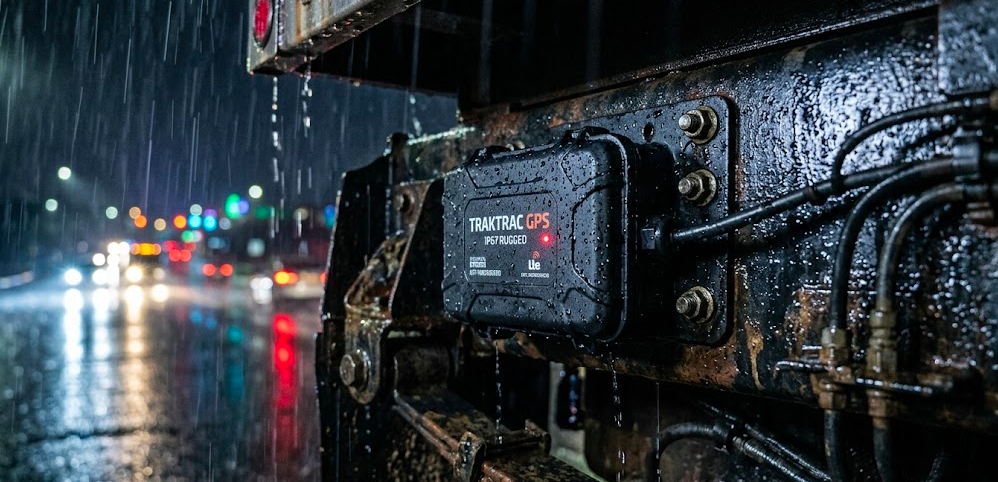
Your truck gets stolen overnight. You open the tracking app and nothing. Your GPS tracker, mounted under the frame, sat in standing water during a rainstorm the night before. It was never coming back online.
This happens more often than most people think. And the reason is almost always the same the tracker was not truly waterproof. If you are shopping for a GPS tracker for your car, truck, trailer, or boat, waterproofing is not a bonus feature. It is the difference between finding your vehicle and filing a police report. Here is everything you need to know before you buy.
Quick Answer: Are GPS Trackers Actually Waterproof?
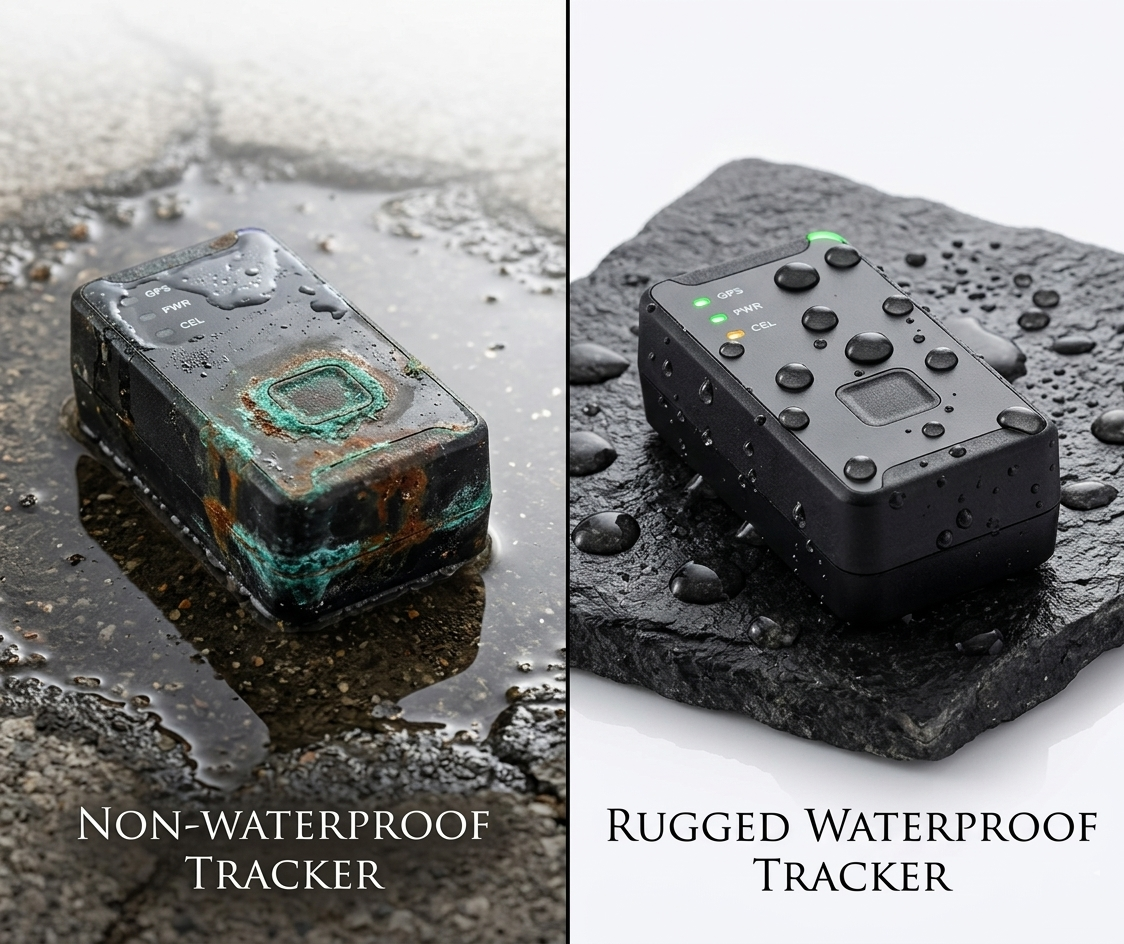
Not all of them. Many GPS trackers are only splash-resistant, meaning they can handle light rain but will fail if they get fully wet or sit in standing water.
A truly waterproof GPS tracker will have an official IP67, IP68, or IP69K rating. These ratings tell you exactly how much water the device can handle. If a tracker just says "weatherproof" or "water-resistant" without an IP rating, be careful that is often just a marketing claim.
One more important thing to know: waterproofing protects the hardware, not the GPS signal. GPS signals cannot travel through water. So even if a tracker survives being submerged, it will not send you live location updates from underwater.
Not sure which GPS tracker is right for you? Read our guide on How to Choose the Right GPS Tracker before you buy.
What Does “Waterproof” Mean For GPS Trackers?
A waterproof GPS tracker is built to survive rain, puddles, mud, and short periods of being underwater without breaking down.
Here is a simple breakdown of the terms you will see:
|
Term |
What It Really Means |
|---|---|
|
Waterproof |
Can handle full submersion within rated limits (IP67 or higher) |
|
Weatherproof |
Handles rain and sleet, but not being fully submerged |
|
Water-Resistant |
Only handles light splashes or brief moisture |
Many product listings in 2026 use these words loosely. Always look for a specific IP rating not just a vague label.
Even waterproof trackers have limits. An IP67 device can survive 1 meter of fresh water for 30 minutes. Go deeper or longer than that, and water can force its way inside and permanently damage the device. Pet, kid, or luggage trackers are made small, so they only handle light splashes. They are not built for heavy rain, so they’re not a good choice for outdoor vehicle use where rain protection is critical.
IP Ratings Explained: How GPS Trackers Are Classified
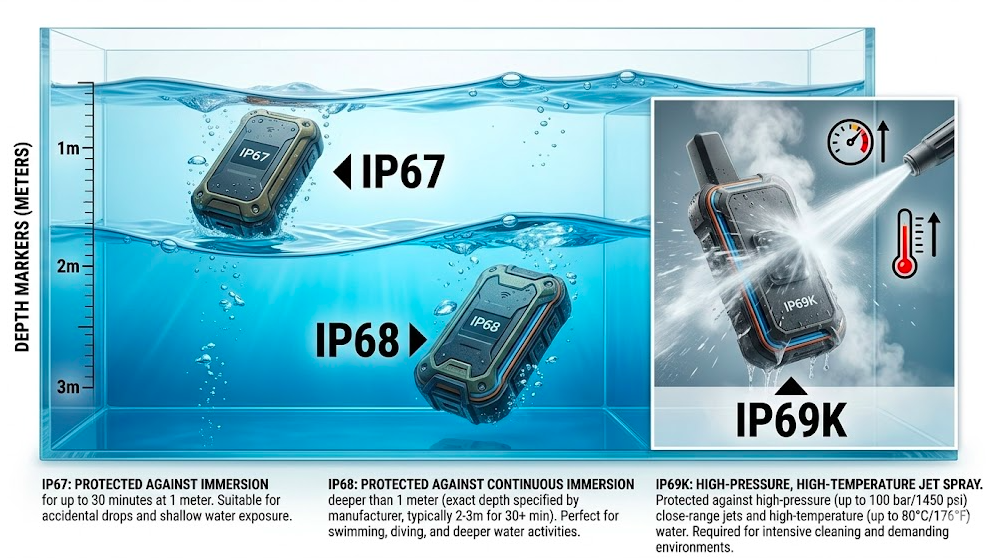
IP stands for Ingress Protection. It is an international standard (IEC 60529) that measures how well a device is protected against dust and water.
The ip rating structure works like this:
- First digit (0-6): Dust and solid protection (6 = completely dust-tight)
- Second digit (0-9K): Water protection (higher = stronger barriers)
Always look for an official IP rating on the product page. Do not trust vague phrases like "waterproof design" unless a real IP number backs it up.
The three most common ratings on GPS trackers in 2026:
- IP67: Dust-tight, survives up to 1 meter of water for 30 minutes
- IP68: Dust-tight, survives deeper or longer submersion (exact specs vary by brand)
- IP69K: Withstands high-pressure, high-temperature water jets
IP67 GPS Trackers: Good for Most People
IP67 is the most common waterproof rating on GPS trackers and for most families and small businesses, it is all you need.
An IP67 tracker can handle:
- Automatic car washes
- Heavy rain and road puddles
- Dogs running through puddles or wet grass
If you are tracking a personal vehicle, a family car, or a small fleet in everyday driving conditions, IP67 gives you solid protection without overpaying for features you do not need.
IP68 GPS Trackers: Better for Boats and Coastal Use
IP68 trackers go beyond IP67. They survive deeper and longer submersion exact specs depend on the manufacturer, but common ratings include 2 to 3 meters for over an hour.
IP68 is the right choice for:
IP68 is preferred for marine applications:
- Small boats on lakes and reservoirs
- Jet skis and personal watercraft
- Boat trailers stored at marinas
- Coastal assets regularly hit by waves or spray
IP68 means the tracker can handle water, but it doesn’t work well underwater. GPS signals don’t travel through water, so tracking becomes inaccurate right away. Better IP68 trackers are built stronger, with tough outer cases and connectors made for long-term outdoor mounting in rugged environments.
IP69K GPS Trackers: Built for Heavy Equipment
IP69K rates devices that withstand high-pressure (80-100 bar), high-temperature (up to 80°C) water jets used in power washers and industrial wash bays. This represents extreme water protection beyond standard submersion ratings.
IP69K-rated GPS trackers serve heavy duty applications:
- Heavy-duty trucks washed daily after construction or waste hauling
- Agricultural machinery cleaning after muddy fieldwork
- Heavy equipment on job sites requiring sanitation compliance
If your vehicles go through a commercial pressure wash on a regular basis, IP69K is worth the investment. Standard IP67 or IP68 devices will eventually fail under that kind of repeated pressure.
Waterproof vs. Weatherproof vs. Water-Resistant: Know the Difference
These three terms are not interchangeable, and confusing them leads to device failures in real-world wet conditions.
Waterproof means capable of surviving full, temporary submersion within IP-rated limits. An IP67 device handles 30 minutes at 1 meter depth; IP68 handles deeper or longer exposure as specified.
Weatherproof means the device withstands rain, sleet, and splashes but isn’t meant for full immersion or long-term standing water. A weatherproof tracker might survive a rainstorm but fail sitting in a parking lot puddle overnight.
Water resistant means it can only handle light splashes or a little moisture. These trackers are fine for indoor use but should not be mounted outside on a vehicle.
For vehicles, boat trailers, and equipment stored outdoors, choose fully waterproof trackers with explicit IP67 or IP68 ratings. Weatherproof labels work only for mild, occasional exposure not assets left in bad weather for extended periods.
How Does a Waterproof GPS Tracker Work?
Every GPS tracker waterproof or not works the same way on the inside:
- A GPS chip receives signals from satellites to find the location
- A microcontroller processes that location data
- A 4G LTE or LTE-M module sends the location to an app on your phone
The waterproofing is all about protecting these internal parts from moisture. Most quality trackers use sealed housings, rubber gaskets, internal antennas, and potting compounds to keep water out.
Most 2026 trackers use advanced chips that connect to multiple satellite systems for better accuracy.They also use 4G networks with backup connections, so tracking works in both cities and remote areas.
Apps like Hapn and SilverCloud show the tracker’s location on your phone in real time. The Hapn GPS app and SilverCloud app connect to these trackers for location updates on mobile devices.
Waterproof trackers typically feature:
- Internal antennas (eliminating external ports)
- Potting compounds encapsulating electronics
- Sealed battery compartments
- Gasket-protected SIM trays
Why Waterproofing Matters More Than Ever in 2026
Recent U.S. weather extremes from 2023-2026 underscore why device’s water resistance matters for outdoor electronics:
- Record Pacific Northwest rainfall (up to 200% above average in some areas)
- Midwest flash floods and severe thunderstorms
- Desert dust combined with Arizona flash floods
- Coastal salt spray intensified by stronger storms
Moisture-related failure can mean losing track of a stolen car, construction trailer, or expensive boat at the exact moment tracking matters most. Road salt accelerates corrosion by 50% on non-sealed units during winter months.
Key Features to Look for in a Waterproof GPS Tracker
Waterproofing is only one piece of the puzzle. Buyers must evaluate multiple key features before committing to a tracking device:
- IP Rating and Build Quality: Look for a certified IP67 or higher. Check that the housing is impact-resistant and that seals and ports are fully covered.
- Battery Life: Compact magnetic trackers typically last 1 to 3 weeks on a charge. Larger units can go 1 to 3 months between charges. If you need longer battery life, look for a device with a standby or power-saving mode.
- Real-Time Tracking: Real-time tracking requires a SIM card and a data plan. Without it, you only get location data after the fact which is not helpful if a vehicle goes missing. Lightning GPS offers real-time tracking with no hidden fees and no long-term contracts.
- Mounting Options: Most waterproof GPS trackers come with a strong magnet, so you can easily attach them to metal surfaces.
- If there’s a lot of vibration (like on trailers or ATVs), use zip ties or brackets to keep the tracker secure.
- Geofencing and Alerts Boundary alerts, speed alerts, and motion alerts are features that make a GPS tracker truly useful for families and businesses not just a device that shows you a location on a map.
Each feature affects how well the tracker performs for your specific outdoor activities and assets.
Choosing the Right IP Rating
Match your IP rating to your actual use case:
|
Use Case |
Recommended Rating |
Why |
|---|---|---|
|
Daily commuter car, city driving |
IP67 |
Handles rain, car washes, puddles |
|
Boat or jet ski on open water |
IP68 |
Survives constant spray, brief submersion |
|
Construction equipment, pressure washed daily |
IP69K |
Handles pressure washing, extreme exposure |
When in doubt, go one level higher than you think you need. An IP68 tracker on a car gives you extra peace of mind and device lifespans can extend 20 to 30% with a higher-rated unit.
Battery Life vs. Size & Concealability
Small waterproof GPS trackers have smaller batteries, so they usually need charging every few days to a few weeks, depending on how often they update.
Typical battery ranges in 2026:
- Compact magnetic models: 1with frequent-3 weeks updates
- Larger units: 1with slower update-3 months s
- Standby mode or saver mode: Extends runtime significantly
Larger waterproof units offer long battery life extending battery life to multi-month periods but are harder to hide on vehicles or equipment.
Car owners prioritizing theft tracking should focus on small size with a powerful built in magnet for quick concealment. Trailer and equipment owners may prefer larger, long-life units where visibility matters less.
High-frequency real time tracking (every 3-10 seconds) provides instant updates but dramatically shortens runtime, batteries drain 5x faster in cold weather conditions below 0°C.
Real-Time Tracking, SIM Cards & Coverage
Real time tracking in 2026 relies on 4G/LTE or LTE-M SIM cards and data plans for live location updates. Most trackers provide real time tracking through AT&T or T-Mobile networks with roaming support.
“No subscription” waterproof trackers often only log data for later download via Bluetooth or USB they don’t provide live theft recovery capabilities. Update frequency options create a trade off between responsiveness and battery life.
Some trackers feature embedded SIMs that auto-activate, while others require user-inserted SIMs with separate affordable subscription plans. Both approaches support geofencing alerts, speed alerts, and historical playback through the companion GPS app.
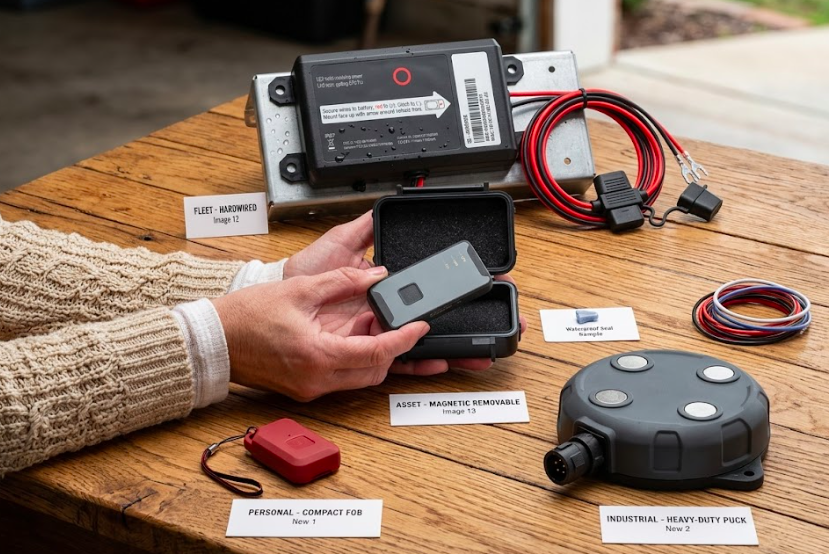
Mounting Options for Waterproof Devices
Common mounting styles for waterproof trackers:
- Strong built in magnet: Quick undercarriage attachment to metal surfaces
- Heavy-duty magnetic case: Adds waterproof protection to unsealed devices
- Adhesive pads: For plastic or fiberglass surfaces without metal
- Zip ties and brackets: Essential backup in high-vibration environments
- Hardwired installation: Constant power, no charging needed
Neodymium magnets provide secure attachment to undercarriages while keeping devices removable for charging. In places with a lot of vibration (like bikes or heavy equipment), use zip ties or brackets along with magnets to keep the tracker secure.
Do not drill holes or use wrong mounts, as this can damage the waterproof seal.
Durability Beyond Just Waterproofing
A good outdoor GPS tracker needs to handle more than water. Look for these features beyond the IP rating:
- Impact-resistant housing: Handles drops and bumps without cracking
- Rust-resistant hardware: Stainless or coated screws for road salt environments
- Vibration-resistant mount: Critical for trailers, forklifts, and semi-trucks
- Wide temperature range: Look for -20°C to +60°C for year-round outdoor use
Vibration can damage weak mounts on trailers, trucks, and forklifts, so strong mounting is important. Extreme temperatures affect both device function and battery performance cold weather reduces runtime significantly. Salt, sun, and dust can wear down the device over time, so better build quality helps it last longer outdoors.
Subscriptions, Costs & Useful Extras
Most real-time waterproof GPS trackers charge a monthly fee of $8–$25, based on features, coverage, and update speed.
Lower-cost or “no fee” options often limit:
- Real time capabilities (delayed updates only)
- History depth (7 days)
- Motion activation sensitivity
Useful extras worth paying for:
- Geofencing alerts when assets leave designated areas
- Speed alerts for monitoring teen drivers or fleet vehicles
- Trip history export (CSV or PDF) for business documentation
- Driver behavior scores for fleet management
- SOS button for personal safety devices
Check the total cost over 2-3 years, including the device, accessories, and subscription. Some trackers offer monthly plans with no long-term commitment, and businesses may claim fees as expenses.
Installation & Waterproofing Best Practices
Even an IP68-rated tracker can fail if installed in the wrong spot. Placement affects water exposure, GPS signal, and cellular connectivity all at once.
Cars & Trucks
Mount the tracker on flat metal under the vehicle body frame rails and trunk areas work best. Avoid placing it near the exhaust, drive shaft, or suspension.
For extra security, you can also hide it inside areas like trunk corners or under rear panels especially useful when choosing the best GPS tracker for teen drivers to enhance safety and assurance. In winter, check the seals regularly, as road salt and ice can damage the housing over time.
Boats, Jet Skis & Marine Assets
Mount inside the cabin under the dashboard or near a window, where it stays dry but has sky visibility. Avoid bilge areas that flood regularly.
After saltwater exposure, always rinse the device with fresh water to protect the seals.
Motorcycles, E-Bikes & Bicycles
Tuck the tracker under the seat or inside the fairing. Always use zip ties alongside the magnet, vibration alone will loosen a magnet-only mount. Avoid easy-to-spot locations that a thief can remove in seconds.
Trailers, Jobsite Equipment & Outdoor Assets
Mount high on the frame to avoid mud and debris. Use tamper-resistant screws or a hidden location to make removal difficult. Once installed, move the asset and confirm the app updates correctly in real time. Equipment theft rose 25%, reliable tracking is one of the most cost-effective ways to protect your assets.
Real-World Use Cases: When You Need a Waterproof GPS Tracker
Waterproof trackers serve far beyond basic car theft protection. Different scenarios require different protection levels and tracking features to track movement effectively.
Cars, SUVs & Pickup Trucks
Drivers in cities like Houston, Atlanta, and Los Angeles need waterproof trackers for theft recovery, teen driver monitoring, and business mileage tracking. IP67 covers most everyday needs. IP68 is better for vehicles regularly driving through heavy rain or flooded streets.
Motorcycles, Scooters & Bicycles
Bikes park outside and face constant weather exposure.
A small IP67 tracker hidden in the frame sends instant alerts if the bike moves without permission, critical in theft-prone areas and rainy regions like the Pacific Northwest.
Trailers, Fleets & Jobsite Equipment
Generators, flatbeds, skid steers, and cargo trailers sit in open lots for days or weeks. A rugged waterproof tracker helps reduce theft losses, verify equipment usage, and keep job sites secure, especially as equipment theft continues to rise across the U.S.
Kids, Pets & Personal Safety Devices
Many GPS wearables for kids and pets are marketed as water resistant or swim-proof for puddles, sprinklers, and brief submersion during water sports. Pet owners particularly value IP67 ratings for dogs jumping in ponds, running through creeks, or rolling in wet grass.
For children playing outdoors frequently or walking to school in rain and snow, higher water protection maintains reliable tracking. These small devices balance waterproof casing, comfort, and runtime, typically 1-2 day battery life limits extended use without charging.
Final Thoughts:
Not all GPS trackers are waterproof and finding that out after a storm, a car wash, or a theft attempt is too late.
The good news is that choosing the right level of protection is simple once you know what to look for. Match your IP rating to your real-world conditions, pick a tracker with the battery life and features you actually need, and mount it in the right spot.
Here is a quick recap before you buy:
- IP67: Best for everyday cars, motorcycles, teen driver monitoring, and family use
- IP68: Best for boats, jet skis, coastal areas, and consistently wet climates
- IP69K: Best for heavy equipment, fleet trucks, and vehicles that get pressure-washed regularly
A waterproof GPS tracker is only worth something if it keeps working when things go wrong. Lightning GPS trackers are built for exactly that real storms, real theft attempts, real emergencies.
Real-time tracking. Geofencing alerts. Lifetime warranty. No contracts. No hidden fees. Shop Lightning GPS Now Set up in minutes. Peace of mind that lasts.
Frequently Asked Questions
Are all GPS trackers waterproof?
No. Many GPS trackers are only splash-resistant or water-resistant, meaning they can handle light rain but will fail in standing water or heavy submersion.
Always check for an official IP67, IP68, or IP69K rating before buying. If a product just says "weatherproof" without an IP number, treat it as a marketing claim not a guarantee.
What is the best IP rating for a GPS tracker?
For most people, IP67 is the sweet spot it handles rain, puddles, car washes, and brief submersion up to 1 meter. If you use your tracker near water, on a boat, or in coastal conditions, go with IP68. For heavy equipment and vehicles that get pressure-washed regularly, choose IP69K.
Can a GPS tracker work underwater?
No, not in the way most people expect.
A waterproof GPS tracker can survive being submerged, but GPS and cellular signals do not travel through water. The tracker will stop sending live location updates the moment it goes underwater and will resume as soon as it comes back to the surface.
What is the difference between waterproof and water-resistant?
Waterproof means the device can survive full, temporary submersion within its rated limits for example, 1 meter for 30 minutes with an IP67 device. Water-resistant only means the device can handle light splashes or brief moisture. For any GPS tracker mounted outdoors on a vehicle, water-resistant is not enough.
How long does a waterproof GPS tracker last on a single charge?
It depends on the size of the device and how often it updates. Compact magnetic trackers typically last 2 days to 3 weeks.
Mid-size units can go 1 to 3 months. Large asset trackers can last up to 12 to 18 months on daily or motion-based updates. Cold weather below 0°C can reduce battery capacity by up to 40%, so plan ahead in winter climates.
Posted by Kellie Kendall on Apr 9th 2026