

GPS Trackers for Delivery Vehicles
Late deliveries frustrate customers, overload dispatch teams, and cost delivery companies real money. GPS trackers for delivery vehicles solve that problem by giving fleet managers real-time visibility into where every vehicle is, how drivers behave on the road, and whether routes are running on schedule.
These systems combine satellite positioning, cellular data networks, and cloud dashboards to provide dispatchers with live maps, automated alerts, and delivery performance reports. For delivery fleets, GPS tracking improves route efficiency, reduces fuel costs, and increases on-time delivery rates.

How GPS Tracking Systems Work in Delivery Fleets
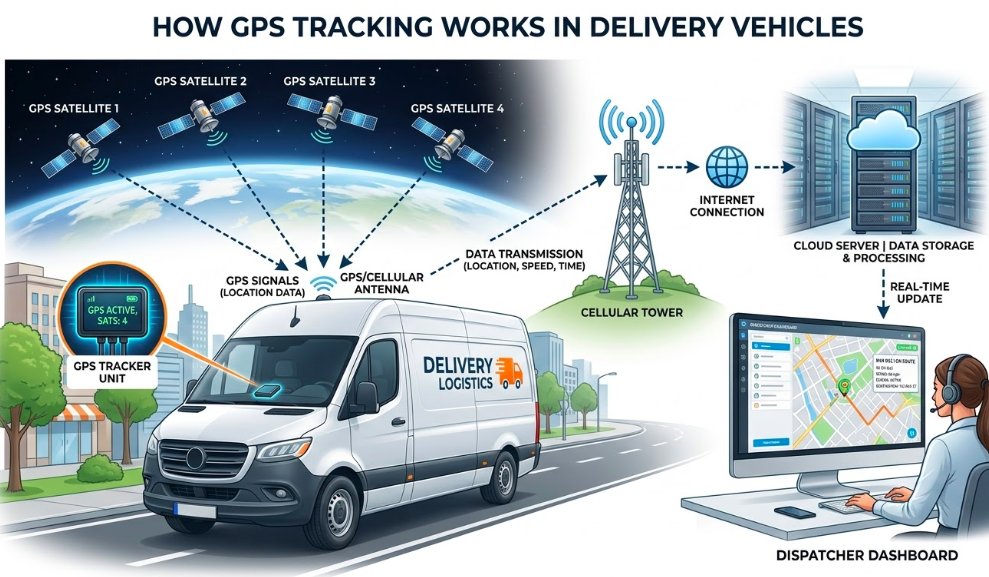
Understanding the basics of GPS technology helps fleet managers evaluate tracking systems more effectively. Modern GPS fleet tracking works through three connected components: satellite positioning, cellular data transmission, and cloud software platforms. A GPS tracker installed in each vehicle receives signals from GPS satellites. Many modern devices also use additional constellations such as GLONASS or Galileo to improve location accuracy.
The device calculates its latitude, longitude, and timestamp. It then transmits this location data through a cellular network to a cloud server. Dispatchers access the information through a web dashboard or mobile app where they can view live vehicle locations, route history, and alerts.
Update intervals vary depending on vehicle activity:
- While the vehicle is moving: Updates every 5-30 seconds provide near real-time visibility for dispatchers managing busy delivery routes.
- When the vehicle is parked or idling: The reporting interval typically slows to around one minute to conserve data usage.
- During signal loss: Quality GPS devices store location data internally and upload it once the cellular connection returns.
Dispatcher View and Data Flow
Dispatchers use dashboards that display live maps with vehicle icons, color-coded by status:
- En route to next stop
- At customer location
- Idle or delayed
- Returning to depot
They can filter by driver, region, or time window, zoom into specific areas, and replay routes from any previous date, useful for investigating a delayed Monday delivery or verifying service times.
Simplified data flow
- Vehicle device sends periodic location data
- Cellular network (4G LTE/5G) transmits data packets
- Cloud server ingests, stores, and processes data
- Dispatcher accesses web dashboard or mobile app for live maps and reports
Key Features of GPS Trackers for Delivery Fleets
Delivery fleet GPS trackers do more than show a vehicle’s location on a map. Modern systems combine real-time tracking with operational tools designed for high-stop delivery routes and tight delivery windows.
The most important GPS tracking features for delivery fleets include real-time tracking, geofencing, driver monitoring, route optimization, and maintenance alerts.
Real-Time Tracking and Location Updates
A reliable delivery fleet tracking system depends on frequent location updates. Most GPS trackers report vehicle positions every 5, 30 seconds while the vehicle is moving, giving dispatchers real-time visibility into routes, delivery progress, and estimated arrival times.
Geofencing
Geofencing creates virtual boundaries around specific locations:
- Customer delivery addresses: Automatically trigger “arrival” notifications when a driver reaches the location.
- Depots or warehouses: Record departure and return times without manual check-ins.
- Service areas: Send alerts if a vehicle leaves its assigned delivery zone.
This feature keeps customers informed about their delivery status and creates automatic audit trails.
Driver Behavior Monitoring
Driver behavior monitoring shows how delivery vehicles are actually driven on the road, including speeding, braking patterns, and idle time. These insights help fleet managers improve safety and reduce operating costs.
Common driver behavior alerts include:
- Speeding alerts when drivers exceed preset speed limits
- Harsh braking or aggressive acceleration, which often signals unsafe driving
- Excessive idling, a major source of wasted fuel
- Sudden lane changes or erratic driving patterns detected by motion sensors
When drivers know their performance is monitored, risky driving habits often decrease. Many fleets see fewer speeding incidents, improved fuel efficiency, and lower accident risk within the first few weeks of using driver monitoring tools.
Route Optimization and Adherence
For multi-stop delivery routes, comparing the planned route with the route a driver actually follows helps fleet managers identify inefficiencies.
Key questions include:
- Did the driver follow the planned stop sequence?
- Were there detours that increased route time or distance?
- How long did the vehicle remain at each delivery stop?
Many GPS tracking platforms integrate with route planning software. Dispatchers can optimize delivery routes in advance and then monitor route adherence in real time, helping identify delays, missed stops, or inefficient detours.
Over time, route history reports reveal patterns such as traffic bottlenecks or consistently slow delivery zones, allowing managers to refine routes and delivery schedules.
Maintenance and Diagnostics
High-mileage delivery vehicles require proactive maintenance to prevent breakdowns and keep delivery schedules running smoothly. Many GPS fleet tracking solutions include built-in maintenance and diagnostic tools.
Common features include:
- Odometer tracking to monitor total vehicle mileage
- Engine fault code alerts through OBD-II or CAN bus connections
- Service reminders triggered by mileage or scheduled maintenance intervals
- Vehicle diagnostics for fuel usage, engine health, and system performance
These maintenance alerts help fleet managers schedule repairs in advance and prevent unexpected breakdowns that could disrupt delivery operations.
Types of GPS Trackers Used in Delivery Vehicles
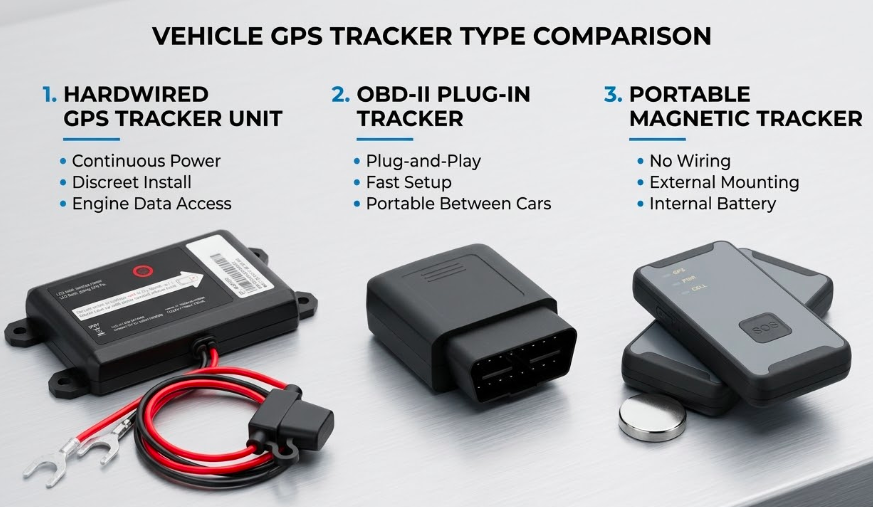
Delivery fleets use several types of GPS tracking devices depending on vehicle type, installation preference, and monitoring requirements. Most fleets choose between three primary device categories, each with specific advantages.
Hardwired Trackers
Hardwired GPS trackers are permanently installed inside a vehicle and connected directly to the electrical system. Because they draw power from the vehicle battery, these devices provide reliable, continuous tracking without requiring battery replacements.
Key characteristics include:
- Installed behind the dashboard and connected directly to the vehicle battery and ignition
- Ideal for company-owned vans, delivery trucks, and heavy-duty trucks
- Provides constant power, tamper resistance, and deeper vehicle diagnostic integration
- Requires professional installation
Best for: Long-term fleet vehicles where permanence and reliability are priorities.
OBD-II Plug-In Devices
OBD-II plug-in GPS trackers connect directly to a vehicle’s onboard diagnostics port, making them one of the easiest tracking devices to install. Because they require no wiring or professional installation, these trackers are commonly used for fleets that need quick deployment or flexible vehicle tracking.
Key characteristics include:
- Plugs directly into the vehicle’s OBD-II port
- Quick installation that takes only a few minutes with no tools required
- Provides location tracking along with vehicle diagnostics, such as fuel usage and engine performance
- More visible and easier to disconnect than hardwired tracking devices
Best for: Mixed fleets, leased vehicles, or businesses that need rapid deployment of tracking devices.
Portable Battery-Powered Units
Portable GPS trackers are self-contained devices with built-in batteries, allowing them to be installed without any vehicle wiring. These units are often magnetically mounted and can be moved between vehicles or attached to cargo and equipment.
Key characteristics include:
- Self-contained design with internal rechargeable batteries
- Often magnetically mounted for quick attachment to vehicles or assets
- No wiring required, allowing devices to move between vehicles or equipment
- Battery life ranges from several days to months depending on tracking frequency
Best for: Temporary rentals, subcontractor vehicles, high-value cargo pallets, or equipment that does not have a power source.
How to Choose the Right GPS Tracker for Delivery Vehicles
Choosing the right GPS tracker for delivery vehicles depends on several operational factors, including fleet size, vehicle types, delivery volume, and your budget for hardware and ongoing service plans. Evaluating these factors carefully helps ensure the tracking system supports efficient routing, accurate delivery monitoring, and long-term fleet management.
Below are the key considerations when selecting a GPS tracking system for delivery fleets.
Update Frequency
One of the most important features of a delivery fleet tracking system is how frequently the device reports its location. Frequent updates provide dispatchers with near real-time visibility into delivery progress and vehicle movement.
- High stop density or customer-facing deliveries: Choose trackers that provide updates every 5-30 seconds for accurate ETAs and live monitoring.
- Long-haul or low-density routes: Update intervals of 1-5 minutes may be sufficient and can help reduce cellular data usage and service costs.
Cost of GPS Tracking Systems
GPS fleet tracking costs generally include hardware, installation, and ongoing subscription services. Typical pricing ranges include:
|
Cost Category |
Typical Range |
|---|---|
|
Hardware (plug-and-play OBD tracker) |
$20-$100 per device |
|
Hardware (hardwired tracker) |
$20-$50+ per device |
|
Portable GPS (battery powered) |
$20-$50+ per device |
|
Professional installation |
$50-$150 per vehicle |
|
Basic subscription plan |
$15-$25 per vehicle/month |
|
Mid-tier subscription plan |
$25-$55 per vehicle/month |
|
Premium subscription plan |
$50-$95+ per vehicle/month |
Some providers offer “free device” plans that bundle hardware costs into long-term subscription contracts. When comparing options, watch for hidden fees such as activation charges, data overages, or early termination penalties.
Network Coverage
Reliable cellular connectivity is essential for real-time GPS tracking. Before selecting a provider, verify that the tracking devices support modern networks and provide coverage across your entire delivery territory.
- Ensure devices support 4G LTE or 5G networks, since older 3G networks are being phased out globally.
- Confirm strong coverage in urban areas, suburban neighborhoods, and regional highways where your vehicles operate.
- For rural routes or remote delivery areas, consider devices that support LTE-M, NB-IoT or satellite fallback connectivity.
Platform Usability
The GPS tracking platform should be easy for dispatchers and fleet managers to use during daily operations. A well-designed platform helps teams monitor vehicles quickly and respond to delivery issues in real time.
Look for platforms that offer:
- A web dashboard with responsive live maps
- Mobile apps for iOS and Android
- Customizable alerts for speeding, arrivals, or geofence breaches
User-friendly software allows dispatchers to monitor fleets efficiently without complex training or technical expertise.
Support and Onboarding
A reliable GPS tracking provider should offer onboarding assistance and responsive customer support. Proper implementation helps teams learn the system quickly and ensures the technology delivers measurable benefits.
Quality providers typically offer:
- Driver and dispatcher training resources
- Setup and installation guidance
- Dedicated customer support channels
A strong onboarding process accelerates adoption and helps organizations realize the return on investment more quickly.
Subscription Plans and Data Services
Most commercial GPS tracking systems operate on subscription plans covering cellular connectivity, cloud access, and data storage, enabling real-time vehicle monitoring and historical route tracking.
Common features include:
- Live vehicle tracking with frequent location updates
- Stored route history for 6-24 months
- Geofence management and alert notifications
Premium plans may offer:
- Faster update intervals (5-10 seconds)
- Advanced driver behavior analytics
- Video telematics and dashcam integration
Look for flexible terms like month-to-month billing, no long-term contracts, and clear warranty policies when comparing providers.
Important GPS Tracker Specifications for Delivery Fleets
Before choosing a GPS tracking solution, review the device’s technical specifications to ensure it meets the operational requirements of delivery fleets.
GPS Accuracy and GNSS Support
- Devices that support multiple satellite systems (GPS, GLONASS, Galileo) provide better accuracy, especially in dense urban areas.
- Typical location accuracy ranges between 3-10 meters under open sky conditions.
Network Compatibility
- Modern trackers should support 4G LTE networks, with 5G compatibility emerging in newer devices.
- Some devices offer LTE-M or NB-IoT connectivity for improved performance in low-power or remote environments.
Power Options
GPS trackers may use different power configurations depending on installation type.
- Constant vehicle power for permanently installed devices
- Backup battery support to continue tracking if power is disconnected
- Some units include internal capacitors that briefly maintain power if wiring is cut.
Once the hardware and connectivity requirements are clear, the next question fleet operators usually ask is simple: will GPS tracking actually reduce operating costs?
Cost Savings from GPS Tracking in Delivery Fleets
Delivery fleets using GPS tracking consistently report significant operational savings:
- Fuel reduction: Less idling, optimized routes, and improved driving habits typically yield 10-15% fuel savings
- Reduced mileage: Eliminating detours and optimizing stop sequences cuts total miles driven
- Lower maintenance costs: Smoother driving reduces wear on brakes, tires, and engines
Many fleet operators see payback within 6-12 months when they implement efficient routing and driver coaching based on GPS data.
Vehicle Theft Prevention with GPS Tracking
GPS tracking serves as both deterrent and recovery tool:
- Real-time alerts if an unauthorized vehicle movement occurs after hours
- Location history provides evidence for insurance claims or police reports
- Geofence alerts notify you immediately if a vehicle leaves approved areas
Driver Accountability and Safety
Documented driving behavior creates accountability:
- Fewer speeding incidents when drivers know they’re monitored
- Reduced harsh braking and aggressive acceleration events
- Objective data for coaching conversations rather than subjective complaints
Improving Fleet Safety with GPS Driver Monitoring
Event alerts transform safety management from reactive to proactive. When the system flags a driver exceeding speed thresholds or exhibiting repeated harsh braking, operations teams can intervene before an accident happens.
Building a safety culture:
- Set clear speed and behavior thresholds aligned with company policy
- Review driver performance monthly using scorecards generated from GPS data
- Conduct coaching sessions focused on specific improvement areas
- Recognize drivers who maintain safe driving habits consistently
Safer fleets translate to lower insurance premiums. Many insurers offer discounts for fleets using telematics and driver monitoring systems, especially those with video telematics that document incidents. Over a full policy year, reduced accidents and claims can significantly offset tracking subscription costs.
Improving Delivery Efficiency with Route Optimization
Real-time dashboards give dispatchers immediate answers to critical questions:
- Which driver is closest to an urgent pickup?
- Is anyone stuck in unexpected traffic?
- Who has capacity for additional stops?
This visibility reduces deadhead miles, the unproductive driving between deliveries, and improves response time to changing conditions.
Using historical data for planning:
- Replay routes from previous weeks to identify traffic patterns by day and time
- Compare actual routes against planned routes to find consistent deviations
- Analyze average stop times to set realistic delivery windows
Regular reports on metrics like route adherence, total daily mileage per vehicle, and idle time help managers make accurate data-driven decisions in weekly planning meetings. Many mid-sized delivery fleets reduce total route miles by 5-15% after implementing high-frequency tracking with optimization tools, helping them save money while improving service.
Installation and Maintenance of Delivery Vehicle GPS Trackers
Implementation varies by device type and vehicle, from compact delivery cars to step vans to large box trucks. Here’s what to expect:
OBD-II Plug-and-Play Installation
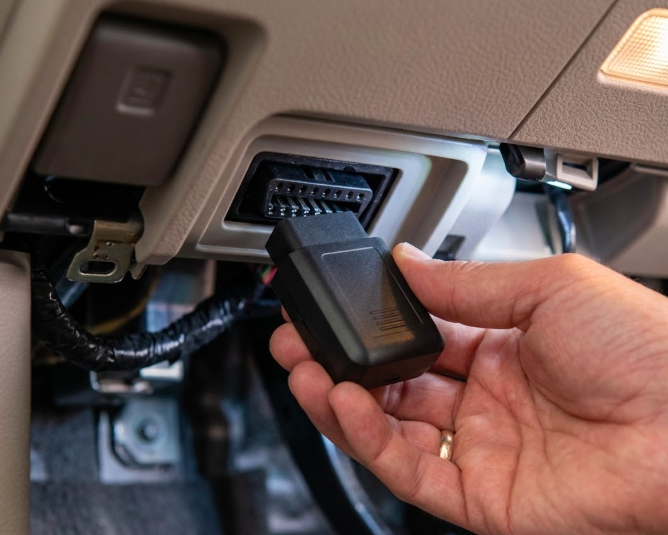
For gps devices that connect to the vehicle’s OBD II port:
- Locate the OBD-II port
- Plug in the device until it clicks into place
- Wait for device boot-up (usually indicated by LED)
- Register the device ID in your fleet tracking platform
- Assign to specific vehicle in your dashboard
Time required: 2-5 minutes per vehicle. Ideal for fast-growing fleets needing easy installation.
Professional Hardwired Installation
For permanent, tamper-resistant setups:
- Schedule vehicle downtime for installation
- Technician connects device to constant 12V power and ignition
- Wiring is secured and hidden behind dashboard panels
- Device connects to CAN bus for vehicle diagnostics (optional)
- System testing confirms GPS signal and data transmission
Time required: 30-90 minutes per vehicle. Cost: $50-$150 for installation labor.

Post-Installation Best Practices
- Test GPS signal: Verify the vehicle appears correctly on your tracking platform
- Confirm updates: Watch for real-time position changes as the vehicle moves
- Trigger test alerts: Create a geofence and confirm arrival/departure notifications work
- Label devices: Mark each device with vehicle ID for easy maintenance tracking
Routine Maintenance
GPS tracking systems require minimal but important ongoing attention:
- Quarterly: Check wiring connections (hardwired units), verify data upload reliability, review alert settings
- As needed: Apply firmware updates pushed by your provider
- Annually: Audit device inventory, replace any malfunctioning units, review feature usage
Legal and Privacy Rules for GPS Tracking in Delivery Fleets
GPS tracking in company vehicles comes with legal and privacy responsibilities. Regulations vary by region, but businesses can usually monitor vehicles they own when they are used for work. Still, companies should be transparent with drivers and set clear policies before deploying tracking systems.
General Legal Guidelines
In most regions, businesses are allowed to track company vehicles during work hours. Common best practices include:
- Company-owned vehicles: Employers generally have the right to monitor business assets.
- Work hours tracking: Monitoring is usually allowed while employees are on duty.
- Personal use: Tracking during off-duty hours may raise privacy concerns.
- Driver notification: Drivers should be informed in writing that vehicles are monitored.
Clear communication helps prevent misunderstandings and legal disputes.
Creating a GPS Tracking Policy
A written tracking policy protects both the company and its employees. The policy should explain:
- What data is collected (location, speed, driving behavior)
- When tracking is active
- Who can access the data
- How the data will be used
- What happens if the policy is violated
If vehicles are used for both work and personal travel, define when tracking applies and document off-duty periods.
Data Security and Storage
Location data can contain sensitive business information, so proper security controls are essential.
Recommended security practices include:
- Encryption for stored and transmitted data
- Role-based access controls
- Access logs to track who views or exports data
- Multi-factor authentication for platform access
Many fleets keep detailed trip records for 12-24 months to support audits, operational analysis, and dispute resolution. Access to this information should be limited to authorized personnel such as operations managers, safety teams, or finance staff.
Conclusion
GPS trackers have become an essential tool for modern delivery fleets. With real-time vehicle visibility, fleet managers can monitor routes, improve driver safety, and reduce operating costs across daily delivery operations.
By combining live tracking, driver behavior monitoring, route optimization, and maintenance alerts, GPS fleet tracking systems help businesses run more efficient and reliable delivery services. Dispatchers gain clear insight into vehicle locations, while managers can make better operational decisions using real data.
For delivery companies looking to improve fleet visibility and delivery performance, modern tracking platforms can provide the tools needed to monitor vehicles, optimize routes, and maintain consistent service. Businesses interested in implementing a reliable fleet tracking system can learn more about professional GPS tracking solutions from Lightning GPS.
FAQ
What is a GPS tracker for delivery vehicles?
A GPS tracker for delivery vehicles is a device installed in a car, van, or truck that reports the vehicle’s location in real time. The tracker sends location data through cellular networks to a cloud platform where fleet managers can monitor routes, driver behavior, and delivery progress.
How accurate are GPS tracking devices for delivery fleets?
Most modern GPS tracking devices provide location accuracy between 3 and 10 meters under normal conditions. Devices that support multiple satellite systems such as GPS, GLONASS, and Galileo usually deliver more reliable positioning in urban areas.
Do GPS trackers help reduce fuel costs in delivery fleets?
Yes. GPS fleet tracking can help reduce fuel consumption by identifying excessive idling, inefficient routes, and aggressive driving behavior. Many fleets report fuel savings of 10-15% after implementing GPS tracking and route optimization.
What types of GPS trackers are used in delivery vehicles?
Delivery fleets typically use three types of GPS tracking devices:
- Hardwired trackers installed directly into the vehicle’s electrical system
- OBD-II plug-in trackers that connect to the vehicle diagnostics port
- Portable battery-powered trackers that can be moved between vehicles or assets
Each type serves different fleet needs depending on installation preference and monitoring requirements.
How much does GPS tracking cost for delivery fleets?
GPS fleet tracking costs usually include hardware and a monthly service subscription.
Typical pricing ranges include:
- $20-$100 for gps tracking devices
- $15-$50 per vehicle per month for subscription plans depending on features
Costs vary based on tracking frequency, analytics tools, and fleet management features.
Can GPS tracking improve delivery efficiency?
Yes. GPS tracking helps dispatchers monitor vehicle locations, optimize routes, and respond quickly to delays. Real-time tracking also reduces deadhead miles, improves route planning, and increases on-time delivery rates.
Posted by Kellie Kendall on Mar 16th 2026