

GPS Tracking Laws By State
GPS tracking can be routine in one state and a criminal offense in another. For businesses managing fleets, employees, or valuable assets, understanding gps tracking laws by state isn’t optional, it’s essential. The rules vary widely based on who owns the vehicle, whether consent is obtained, and how the tracking data is used.
This guide breaks down U.S. gps tracking laws as of 2026, with a clear focus on employers, fleet operators, and small businesses operating across state lines. Unlike many compliance areas, there is no single federal law governing GPS tracking for private businesses. Instead, regulations are shaped by a patchwork of state stalking, privacy, and electronic surveillance statutes, each with its own requirements and penalties.
You’ll learn when GPS tracking is generally legal, how laws differ from state to state, and what your business needs to do to stay compliant.
Disclaimer: This content is for informational purposes only and does not constitute legal advice. Always verify current laws or consult qualified legal counsel before implementing or modifying GPS tracking policies.

When Is GPS Tracking Generally Legal in the U.S.?
Understanding when gps tracking is legal starts with a few core principles that apply across most jurisdictions.
Key legal principles:
- Vehicle owners and lessees can generally place gps trackers for your fleet on vehicles they own or control, especially for legitimate business purposes like dispatch optimization, driver safety, and theft recovery
- Secretly placing a gps device on a vehicle you do not own or without the owner’s consent is illegal in many states and may trigger stalking, cyberstalking, or unlawful surveillance charges
- Tracking employees outside working hours, or tracking personal vehicles and personal phones, raises higher privacy and consent risks even where not explicitly banned
- Intent matters significantly using GPS for harassment, intimidation, or domestic abuse can trigger enhanced penalties, even when tracking devices are otherwise technically legal to install
The safest approach is straightforward track only company owned vehicles, disclose tracking to employees, and limit monitoring to work-related activities.
Federal GPS Tracking Framework (ELD Mandate & Key Court Cases)

Federal rules mainly affect law enforcement and interstate trucking operations rather than day-to-day employer tracking policies. However, several federal precedents shape how states interpret GPS regulations.
United States v. Jones (2012): The Supreme Court ruled unanimously that law enforcement must obtain a search warrant before attaching a GPS tracker to a suspect's vehicle, though justices were split 5-4 on the underlying legal reasoning. This decision framed unauthorized tracking as a Fourth Amendment search, influencing how state courts view private-actor installations on vehicles they do not own.
Elgin v. St. Louis Coca-Cola Bottling Co. (8th Cir. 1999): This case affirmed that employers can monitor their own vehicles and drivers, particularly when tracking is disclosed. This ruling remains influential for business-friendly interpretations nationwide.
FMCSA Electronic Logging Device (ELD) Mandate: Since December 18, 2017, the Federal Motor Carrier Safety Administration requires commercial truck drivers operating vehicles over 10,001 pounds GVWR to use GPS-integrated electronic logging devices. This mandate requires commercial truck drivers to maintain accurate hours-of-service records. Exemptions apply to short-haul drivers (within 150 air-miles), pre-2000 engines, and vehicles used 8 or fewer days in any 30-day period. Non-compliance fines can reach up to $16,000 per violation.
Federal law also intersects with state privacy statutes like the California Consumer Privacy Act, which affect how gps data is stored and shared.
GPS Tracking Laws by State (Quick-Reference Overview)
State laws governing tracking laws by state generally fall into four categories based on their approach to consent, ownership, and statutory framework.
Owner-friendly but stalking limits: States like Texas, Alabama, Utah, and Arkansas allow broad tracking of company-owned vehicles but prohibit tracking another person's vehicle without consent under anti-stalking laws.
These states typically make unauthorized tracking a misdemeanor.
Strict consent/notice required: California, Connecticut, New Jersey, Nevada, Indiana, Illinois, and South Carolina require explicit written consent or advance notice before electronic monitoring of vehicles used by employees. Violations can result in substantial fines or criminal charges.
Primarily covered by stalking/harassment law: Colorado, Kansas, Louisiana, Maine, and Minnesota rely on general stalking and harassment laws rather than specific GPS tracking laws. Using an electronic tracking device to cause fear or distress triggers criminal liability.
Minimal or indirect GPS-specific rules: Georgia, Mississippi, Montana, Nebraska, and South Dakota have limited direct regulation, deferring to civil privacy torts or federal baselines.
For multi-state fleets, compliance requires meeting the strictest applicable state requirements when drivers regularly cross borders. A California-based driver operating in Nevada and Arizona means your policy must satisfy California's stringent standards everywhere.
State-by-State GPS Tracking Laws (50-State Hub)
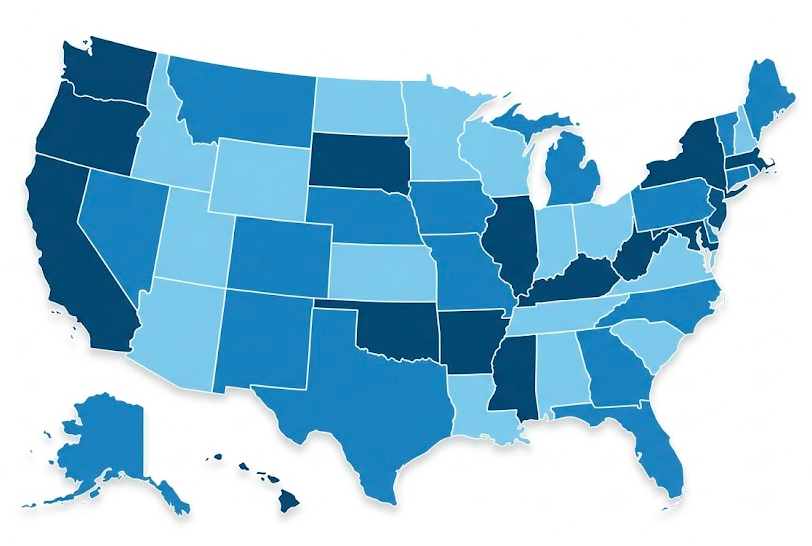
This section walks through each state alphabetically with practical summaries for employers and fleet operators. Each subsection includes relevant statute references and clarifies what employers can generally do versus what to avoid.
Alabama
In Alabama, GPS tracking is generally permitted for legitimate business use, but employers must avoid any conduct that could be considered unlawful surveillance or stalking.
- Ala. Code §13A-11-32 addresses unlawful surveillance in private places
- Employers can track company vehicles on public roads without restriction
- Placing tracking devices on another person’s vehicle or using trackers for stalking is prohibited
- Recommend written acknowledgment from drivers operating GPS-equipped fleet vehicles
Alaska
In Alaska, GPS tracking laws are primarily enforced through anti-stalking statutes, making consent and intent critical factors for employers.
- Anti-stalking provisions under AS 11.41.270 treat non-consensual location monitoring as third-degree stalking when it causes reasonable fear
- Employers should obtain driver consent for vehicles not owned by the company
- Penalties include misdemeanor charges with up to 1 year imprisonment
Arizona
Arizona has one of the more explicit statutes addressing GPS-based monitoring, with strict penalties when tracking crosses into unauthorized surveillance.
- Arizona Revised Statutes §13-2923 explicitly criminalizes using electronic tracking devices to surveil a person continuously for 12+ hours or on two or more occasions without authorization
- This is classified as a Class 5 felony
- Recommend written consent for all employees operating tracked vehicles
Arkansas
Arkansas does not have a GPS-specific tracking statute, but employers must rely on general stalking laws and ensure tracking is tied to a legitimate business purpose.
- Arkansas lacks a GPS-specific statute but relies on Ark. Code §5-71-209 covering third-degree stalking through “course of conduct”
- Employers should obtain consent and limit tracking to company-owned vehicles
- Best practice per state AG guidance: document business purposes clearly
California
California has some of the strictest GPS tracking laws, with clear consent requirements and strong privacy protections for employees.
- Penal Code §637.7 prohibits using an electronic tracking device to determine a person’s location without consent, with limited exceptions for owners and lessees
- Violations may result in civil penalties and fines under privacy laws, including up to $7,500 per violation under CCPA
- Employers may track company-owned or leased vehicles for legitimate business purposes, but must disclose tracking and limit it to work-related use
- Recommend written consent and clear GPS tracking policies, especially when there is any possibility of off-duty or personal use
Colorado
Colorado regulates GPS tracking primarily through stalking laws, meaning intent and impact on the individual are key factors.
- C.R.S. §18-3-602 (“Vonnie’s Law”) makes repeated electronic monitoring causing serious emotional distress a felony stalking offense
- Transparent GPS use on company vehicles for legitimate purposes is acceptable
- Avoid tracking employees outside work hours or in ways that could cause distress
Connecticut
Connecticut requires clear employer disclosure before any electronic monitoring, including GPS tracking of vehicles used by employees.
- Public Act 21-56 and the Electronic Monitoring Act require employers to give prior written notice of electronic monitoring, including vehicles
- Notice must detail the scope of monitoring
- Written policy distribution is mandatory; 2022 AG enforcement yielded 15 settlements
Delaware
Delaware enforces GPS tracking restrictions through consent-based rules, focusing on vehicle ownership and authorization.
- Title 11, Chapter 5 criminalizes installing trackers on a vehicle without the owner’s or lessee’s consent
- Law enforcement and guardians have limited exceptions
- Track only vehicles titled or leased in your business name
Florida
Florida law explicitly prohibits unauthorized GPS tracking, with clear consent requirements for vehicle monitoring.
- Fla. Stat. §934.425 prohibits installing a tracking device on another’s vehicle without consent
- Exceptions exist for parents tracking minor children’s vehicles and law enforcement with warrant
- Written employee consent recommended for any tracking program
Georgia
Georgia does not have a GPS-specific tracking law, but employers must follow general privacy and stalking principles when using tracking devices.
- Georgia lacks specific gps tracking laws but applies general invasion of privacy and stalking principles
- Hidden trackers on vehicles not owned by the company can lead to criminal or civil liability
- Employers should disclose tracking and limit it to company vehicles
Hawaii
Hawaii regulates GPS tracking under broader electronic surveillance laws, making consent an important factor for employers.
- H.R.S. §§803-41 and 803-42 regulate electronic surveillance, generally requiring consent or court order
- Obtain consent if tracking employee-owned vehicles or devices
- Fleet tracking of company assets is generally permitted with disclosure
Idaho
Idaho does not have a GPS-specific tracking statute, but electronic monitoring is regulated through communication interception and stalking laws.
- Idaho Code §18-6702 targets interception of communications
- Anti-stalking law §18-7905 can encompass abusive GPS tracking
- Keep tracking tied to clear business needs; avoid any conduct perceived as harassment
Illinois
Illinois has clear restrictions on unauthorized GPS tracking, with criminal penalties for placing tracking devices without consent.
- 720 ILCS 5/21-2.5 makes placing a tracker on a vehicle without the owner’s consent a Class 4 felony
- Employers may monitor company-owned vehicles when drivers are notified
- Personal vehicles generally require consent; off-duty tracking under anti-stalking provisions is risky
Indiana
Indiana has specific consent requirements for GPS tracking, particularly when vehicles are not owned by the employer.
- Indiana Code §35-46-8.5-1, requires written consent when tracking vehicles not owned by the installer
- Level 6 felony for repeat offenses
- Secure signed consents for assigned personal vehicles or mileage-reimbursement scenarios
Iowa
Iowa regulates GPS tracking through consent and “legitimate purpose” standards, making transparency important for employers.
- Iowa Code §708.11A criminalizes placing GPS devices without a legitimate purpose or consent
- Business tracking is defensible when purpose is documented and employees are informed
- Penalties include misdemeanor charges
Kansas
Kansas does not have a standalone GPS tracking statute, but tracking activities are regulated under stalking laws.
- No standalone GPS statute; stalking law K.S.A. §21-5427 covers repeated tracking causing fear
- Restrict tracking to business-related monitoring of company vehicles
- Avoid repeated monitoring of personal vehicles without consent
Kentucky
Kentucky regulates GPS tracking under anti-stalking laws, making consent and intent key factors for employers.
- KRS §508.152 provides anti-stalking protections covering electronic monitoring
- Installing trackers on an employee’s personal vehicle without consent can trigger criminal charges
- Document all business justifications for tracking
Louisiana
Louisiana has a clear statute prohibiting unauthorized GPS tracking, with strong emphasis on consent.
- La. R.S. §14:323 prohibits tracking a person’s location without consent
- Always obtain explicit consent when tracking employees via apps or personal devices
- Document the legitimate purpose for all tracking activities
Maine
Maine regulates GPS tracking under stalking laws, focusing on whether monitoring causes fear or emotional distress.
- 17-A M.R.S. §210-A on stalking includes tracking and monitoring
- GPS use must not cause reasonable fear or emotional distress
- Tie all tracking to legitimate business objectives
Maryland
Maryland regulates GPS tracking under stalking laws, with strict consent expectations for monitoring a person’s location.
- Md. Code, Crim. Law §3-802 makes tracking someone’s location without consent criminal stalking
- Written notice and opt-in required for any tracking of non-company vehicles
- Harassment laws apply broadly to electronic means of surveillance
Massachusetts
Massachusetts regulates GPS tracking under stalking laws, with increasing scrutiny on electronic monitoring practices.
- ALM GL c. 265, §43A covers stalking including electronic tracking
- Proposed bills may tighten GPS rules further
- Conservative practices recommended: track only company vehicles, limit to work hours, provide clear written disclosures
Michigan
Michigan restricts GPS tracking through privacy and surveillance laws, with a focus on consent and vehicle ownership.
- MCL 750.5391–750.539r restrict installing tracking devices without the owner’s consent
- Employers may track fleet vehicles with disclosure
- Avoid surreptitious tracking of personal vehicles
Minnesota
Minnesota has clear statutory restrictions on GPS tracking, with strict consent requirements and defined penalties.
- Minn. Stat. §626A.35 prohibits using a mobile tracking device to track a person’s location without consent or court authorization
- Penalties include fines up to $3,000 and 364 days jail
- Consent or clear ownership relationship is essential
Mississippi
Mississippi does not have a GPS-specific tracking law, but misuse of tracking devices may fall under stalking and harassment statutes.
- No GPS-specific law; stalking statute §97-3-107 can encompass electronic tracking used to harass
- Best practice: documented consent, limit tracking to work tasks
- Focus on company-owned assets
Missouri
Missouri has clear consent-based restrictions on GPS tracking, particularly regarding vehicle ownership.
- §455.095 forbids installing electronic tracking devices without the vehicle owner’s consent
- Employers can track vehicles titled to the business
- Disclosure to drivers still recommended
Montana
Montana has limited direct regulation of GPS tracking for private employers, with most laws focused on law enforcement use.
- House Bill 603 focuses on law enforcement warrants for GPS
- Business tracking of company assets is generally not restricted
- Respect employee privacy and disclose tracking practices
Nebraska
Nebraska has limited GPS-specific regulation, with most rules focused on court-authorized tracking and general privacy protections.
- Neb. Rev. Stat. §86-2,103 allows courts to authorize tracking devices
- No broad ban on employer tracking exists
- Misuse could implicate stalking or harassment laws
Nevada
Nevada has strict GPS tracking laws with explicit consent requirements and significant criminal penalties for violations.
- AB356 makes it unlawful to install or use an electronic location tracker on a vehicle without the owner’s or lessee’s consent
- Category B felony for violations
- Businesses must get consent for tracking vehicles not titled to the company
New Hampshire
New Hampshire has clear consent-based restrictions on GPS tracking, with strict limits on installing devices without authorization.
- RSA 644-A:4 criminalizes placing an electronic tracking device on a motor vehicle without the owner’s consent
- Even well-intentioned tracking of employees’ personal vehicles is prohibited
- Install gps trackers only on company-owned assets
New Jersey
New Jersey requires strict employer transparency, with mandatory notice before any GPS or electronic tracking of employees.
- N.J.S.A. §34:6B-22 requires employers to provide prior written notice before using GPS or similar tracking on vehicles used by employees
- Escalating fines for violations starting at $1,000
- Written gps tracking policy distribution at hire is mandatory
New Mexico
New Mexico regulates GPS tracking primarily through anti-stalking laws, with liability tied to intent and impact.
- Anti-stalking statute §30-3A-3 covers GPS when used as part of threatening or harassing conduct
- Avoid covert tracking; document legitimate business uses
- Focus tracking on company fleet assets
New York
New York regulates GPS tracking under stalking laws, with emphasis on consent and avoiding intrusive or non-work-related monitoring.
- Penal Law §120.45 and related stalking provisions include electronic tracking
- Employers may monitor company vehicles when drivers are notified
- Limit tracking to working time; off-hours monitoring raises liability risks
North Carolina
North Carolina regulates GPS tracking through cyberstalking laws, with a focus on consent and electronic monitoring of movements.
- N.C.G.S. §14-196.3 on cyberstalking covers tracking a person’s movements electronically without consent
- Company-owned fleet vehicles have explicit allowances
- Avoid using trackers on personal cars without written agreements
North Dakota
North Dakota regulates GPS tracking through stalking and privacy laws, with a focus on intent and legitimate purpose.
- N.D.C.C. §12.1-17-07.1 prohibits using electronic devices to track a person in a manner causing intimidation or reasonable fear without a legitimate purpose
- Well-documented fleet management qualifies as legitimate
- Written acknowledgments recommended
Ohio
Ohio regulates GPS tracking under stalking laws, with liability tied to conduct that causes fear or mental distress.
- §2903.211 (menacing by stalking) includes electronic monitoring causing fear or mental distress
- Avoid any tracking that feels punitive or excessive relative to job duties
- Transparent policies protect employers
Oklahoma
Oklahoma has explicit restrictions on GPS tracking, requiring consent before installing or using tracking devices.
- Title 21 §1173 bans use of electronic tracking devices without consent
- Exceptions exist for law enforcement and common carriers
- Business owners must obtain consent when vehicles are not company-titled
Oregon
Oregon has strict consent-based GPS tracking laws, with significant penalties for unauthorized use.
- ORS §163.715–163.732 bans attaching GPS devices to vehicles without the owner’s consent
- Company-owned vehicles are safe to track with disclosure
- Covert tracking of employees’ own vehicles is risky; civil penalties up to $125,000
Pennsylvania
Pennsylvania has strict consent-based rules for GPS tracking, with criminal penalties for unauthorized use.
- 18 Pa.C.S. §5704 criminalizes installing a mobile tracking device or location tracking device without consent
- Exceptions for owners and law enforcement
- Inform employees about all drivers of tracking on fleet vehicles
Rhode Island
Rhode Island enforces consent-based restrictions on GPS tracking, with specific limits on installing devices in vehicles.
- Gen. Laws §11-69-1 restricts installing electronic tracking devices in vehicles without consent
- Specific exceptions for parents of minors, law enforcement, and certain businesses
- Obtain consent from operators and, where required, regular occupants
South Carolina
South Carolina has explicit laws restricting GPS tracking, with clear consent requirements for vehicle monitoring.
- Bill 3213, makes it unlawful to place GPS devices on a vehicle without consent or court order
- Law enforcement officers also require authorization
- Secure consent when vehicles are not clearly company-owned
South Dakota
South Dakota has limited direct regulation of GPS tracking for private employers, with most laws focused on law enforcement use.
- SDCL §23A-35-4.3 addresses warrants for law enforcement GPS tracking
- Little direct regulation for private employers exists
- Adhere to general privacy standards and maintain clear internal policies
Tennessee
Tennessee has clear consent requirements for GPS tracking, particularly regarding vehicle ownership.
- Tenn. Code Ann. §39-13-606 prohibits placing tracking devices in a motor vehicle without all owners’ consent
- Employers can track company-owned vehicles freely
- Never secretly track employees’ personal cars
Texas
Texas has clear consent-based restrictions on GPS tracking, while remaining relatively business-friendly for employer use.
- Penal Code §16.06 bans placement of a tracking device on a motor vehicle without the owner’s or lessee’s consent
- Class A misdemeanor with fines up to $4,000 and 1 year jail
- Texas is relatively business-friendly if companies own the vehicles and disclose tracking; 85% fleet compliance rates reported
Utah
Utah has clear consent requirements for GPS tracking, with explicit allowances for vehicle owners.
- Utah Code §76-9-408 forbids installation of tracking devices without the owner’s or lessee’s permission
- Tracking your own vehicles is explicitly allowed
- Written notices still recommended to avoid disputes with vehicle owners
Vermont
Vermont regulates GPS tracking primarily through stalking and privacy laws, with emphasis on transparency and lawful use.
- Anti-stalking statutes regulate tracking that causes harm or reasonable fear
- Vermont Electronic Communication Privacy protections govern law enforcement access to GPS data
- Transparent employer tracking of fleet vehicles is generally permitted
Virginia
Virginia has strict consent-based GPS tracking laws, with criminal penalties for monitoring a person’s location without authorization.
- Va. Code §18.2-60.5 criminalizes using electronic tracking devices to monitor a person’s location without their knowledge and consent
- Exceptions for family, caretakers, and law enforcement with warrants
- Obtain explicit consent before tracking non-company vehicles
Washington
Washington regulates GPS tracking under stalking laws, focusing on conduct that causes fear or distress.
- RCW 9A.90.130 prohibits electronic tracking used to cause reasonable fear
- Maintain transparent policies
- Avoid using GPS data in ways perceived as harassment
West Virginia
West Virginia has explicit consent-based restrictions on GPS tracking, with escalating penalties for violations.
- W. Va. Code §61-3-50 makes unauthorized tracking a misdemeanor on first offense and felony for subsequent offenses
- Strict consent requirement before tracking employees’ vehicles
- Prohibits tracking without the owner’s consent
Wisconsin
Wisconsin has clear consent-based restrictions on GPS tracking, with both criminal penalties and recent enforcement actions highlighting compliance risks.
- Wis. Stat. §940.315 bans placing a GPS tracker or vehicle tracker on a vehicle without owner consent
- Tracking company-owned vehicles is permitted with disclosure
Wyoming
Wyoming regulates GPS tracking under stalking laws, with liability tied to conduct that causes emotional distress or fear.
- Wyo. Stat. §6-2-506 is the state’s anti-stalking law covering electronic surveillance causing emotional distress
- Use GPS narrowly for safety and logistics
- Obtain written acknowledgments from all tracked employees
Key Themes Across States: Ownership, Consent, and Purpose
Several patterns emerge from this state survey. Most states differ sharply between tracking vehicles you own versus vehicles owned by others.
Ownership or lease rights provide the strongest legal foundation for gps fleet tracking systems, but many states still expect transparency with employees and absolutely forbid malicious use. Consent, preferably in writing is a recurring theme whenever tracking touches personal vehicles, personal smartphones, or off-duty time. Even states without specific gps tracking laws often allow employees to bring invasion of privacy claims if tracking occurs covertly on their property.
A legitimate business purpose separates acceptable tracking from potential stalking or harassment charges. Route optimization, proof-of-delivery verification, driver safety scoring, and theft recovery all qualify. Using GPS data punitively, monitoring a person’s location outside work without justification, or sharing data inappropriately dissolves this protection.
Multi-state employers should design policies meeting or exceeding the strictest state requirements where they operate. If your fleet touches California, Connecticut, or New Jersey, build your policy to their standards.
How to Build a Compliant GPS Tracking Policy for Your Company
A written gps tracking policy protects both your business and your employees. Here is how to implement gps tracking compliantly:
Define clear objectives: State why you are tracking, safety, utilization, fuel savings, theft recovery. Also state what you will not do: no covert tracking of personal cars, no off-duty monitoring without strong justification.
Specify covered vehicles and devices: Identify which assets are tracked (company trucks, pool cars, installed devices vs. mobile apps). Clarify how often location data is captured (real-time vs. periodic check-ins).
Describe data practices: Include plain-language explanation of data types collected (location, speed, idle time), retention periods (industry best practice: 30-90 days for non-incident data), who can access records, and how data may be used in HR or safety programs.
Align with privacy laws: Reference applicable statutes like CCPA or state-specific privacy acts. Include procedures for responding to employee questions, complaints, or requests to see their tracking data.
Legal review: Have the final policy reviewed by counsel familiar with employment and privacy law in your operating states.

Obtaining and Documenting Employee Consent
While not every state mandates written consent, it remains one of the strongest protections for employers and employees alike. Getting employee consent documented properly avoids disputes later.
What a GPS consent form should contain:
- Explanation of purpose (dispatch efficiency, safety, compliance)
- List of devices and vehicles covered
- Description of data collected and retention period
- Statement of work-hour limitations
- Acknowledgment that employee received the full policy
States like Connecticut, New Jersey, Indiana, Nevada, Rhode Island, and South Carolina have explicit statutes requiring advance notice or consent. Your forms should reference those obligations where relevant.
Common Compliance Risks and How to Avoid Them
Even well-meaning GPS tracking can cause problems if not handled right. Most issues happen when there’s no clear communication, tracking goes too far, or data isn’t managed properly.
Common mistakes:
- Putting hidden trackers on personal cars
- Tracking employees outside work hours without a good reason
- Not updating policies when laws change
- Sharing GPS data with too many people
Possible consequences:
- Criminal charges like stalking or unauthorized tracking
- Lawsuits for privacy invasion or emotional harm
- Damage to company reputation if employees complain
How to stay safe:
- Regularly review GPS tracking policies with legal help
- Limit who can see location data
- Keep only necessary data and delete old info
- Train managers on proper use of GPS data
- Only collect data needed for business purposes
Conclusion
GPS tracking laws in the U.S. are not consistent and that’s exactly where businesses run into risk. What’s perfectly legal in one state can quickly become a compliance issue or even a criminal offense in another.
For companies managing fleets, employees, or assets across state lines, the safest approach is not to chase every individual law, but to build one strong, consistent policy that meets the strictest requirements. If your operations touch states like California, New Jersey, or Connecticut, your entire tracking program should align with those higher standards.
The good news? Staying compliant doesn’t have to be complicated. It comes down to a few smart practices:
- Track only company-owned or clearly authorized vehicles
- Always inform employees and obtain written consent when required
- Limit monitoring to work hours and legitimate business purposes
- Be transparent about what data you collect and how it’s used
Thousands of businesses across the U.S. use Lightning GPS to track their fleets transparently and compliantly. Whether you need a wired, plug-in, or magnetic tracker, we have a solution for every fleet size.
Beyond legal compliance, trust is key. Employees accept GPS tracking more readily when they know the purpose and feel their privacy is respected. Successful businesses keep tracking policies clear, transparent, and consistent. Set expectations early, document policies, and update them as laws change.
Stay consistent, stay transparent, and your fleet stays protected, in every state you operate.
FAQ
Is GPS tracking legal for employers?
Yes. In all 50 states, employers can legally track vehicles that the company owns or leases. However, employees should be clearly informed about the tracking. Problems usually arise when tracking is hidden or used in ways employees don’t expect.
Can employers track personal vehicles?
Only with clear and informed consent. In most states, placing a GPS device on a personal vehicle without permission is illegal and can lead to criminal charges or lawsuits. Written consent is strongly recommended.
Is GPS tracking legal in California?
Yes, but California has some of the strictest rules. Employers must disclose tracking, limit it to business use, and avoid tracking employees outside work hours without separate consent. Privacy laws like CCPA also apply to how data is handled.
GPS tracking laws vary widely across states, so businesses should always follow the strictest applicable rules to stay compliant.
Do employers need to inform employees about GPS tracking?
In many states, yes. Some states require written notice or consent before tracking begins. Even where it’s not legally required, informing employees is a best practice to avoid disputes and legal risk.
Can tracking employees after work hours cause problems?
Yes. Off-duty tracking is one of the biggest legal risks. It can violate privacy expectations and, in some cases, trigger stalking or harassment claims, especially if personal vehicles or phones are involved.
Posted by Kellie Kendall on Mar 27th 2026