

Wired vs Wireless GPS Trackers: How to Choose the Right Device in 2026
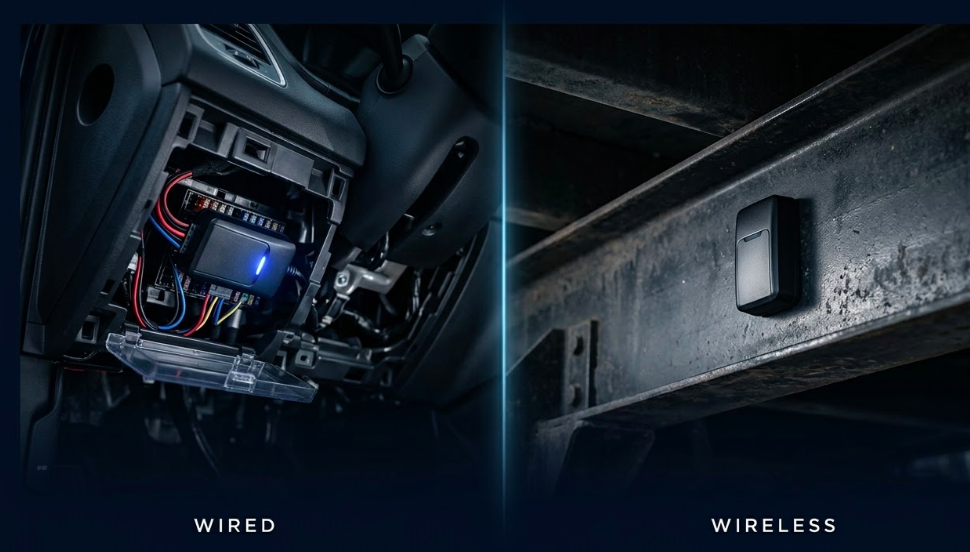
Two trackers. Same price. Completely different results. Most buyers don't find out which one was wrong until it's too late. Every one of those problems has the same fix, the right GPS tracker on the right asset. But walk into the market unprepared and you'll face dozens of devices, conflicting specs, and a choice that feels more complicated than it should be: wired or wireless?
Here's the truth: choosing between wired and wireless GPS trackers comes down to one question, does your asset have reliable power, or does it need to track independently? Get that answer right and everything else falls into place: installation complexity, update frequency, and the depth of real-time data you receive.
In 2026, both technologies have matured significantly. Whether you manage a delivery fleet, monitor construction equipment, or need personal tracking for a single vehicle, this guide cuts through the noise so you can pick the right GPS tracking solution and stop guessing.
Quick Answer: Wired vs Wireless GPS Trackers
The main difference between wired and wireless GPS trackers is power. Wired GPS trackers draw power directly from the vehicle's electrical system, delivering uninterrupted tracking and advanced features without battery concerns. Wireless GPS trackers run on internal batteries, offering portable, flexible tracking for assets that lack power or need temporary monitoring
Choose Wired GPS Trackers if you manage: Long-haul trucking fleets, delivery vans, or service vehicles requiring real-time tracking and vehicle diagnostics, construction vehicles and heavy equipment on multi-year projects, utility or municipal fleets where compliance and audit trails matter.
Choose Wireless GPS Trackers if you're monitoring: Separate trailers, containers, or flatbeds parked at customer sites, rental equipment, generators, or construction site assets that move between locations, personal vehicles, boats, ATVs, or small-business gear needing flexible deployment.
What Are Wired GPS Trackers?
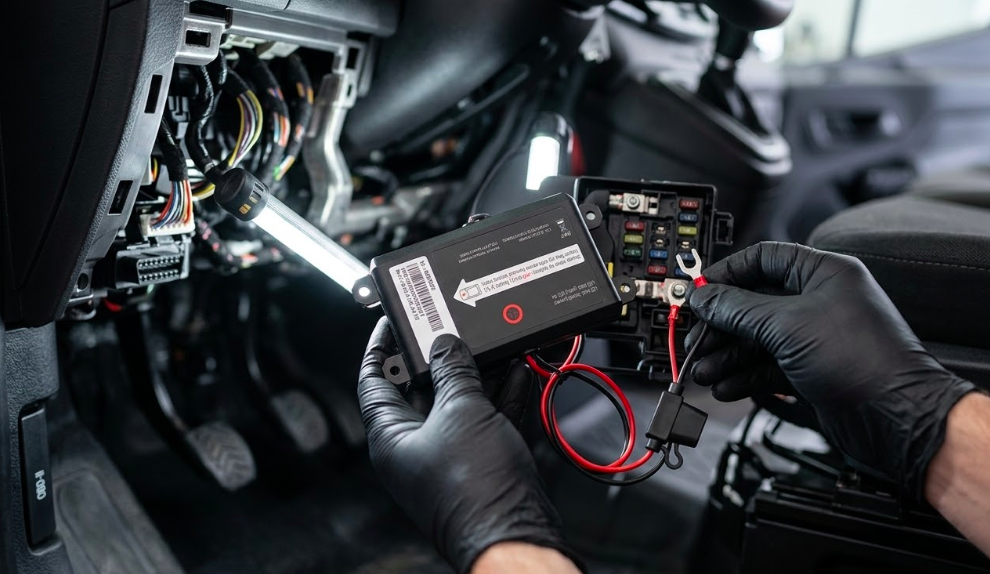
Wired GPS trackers are GPS tracking devices hardwired directly into a vehicle's 12V or 24V electrical system, providing continuous tracking without reliance on internal batteries. These wired tracking devices are the backbone of commercial fleet management, built for trucks, delivery vans, service vehicles, and heavy equipment that run daily operations.
The setup combines a GPS receiver for satellite positioning with a cellular modem (typically 4G LTE, with 5G rolling out in newer 2026 models) for real-time data transmission. A small internal backup battery, usually rated for 1-2 hours, allows the device to send a final location or tamper alert if power is suddenly cut.
Installation involves connecting to constant power, ignition-switched power and ground. Technicians typically tap into the vehicle's fuse box or OBD-II port, then mount these wired GPS devices behind the dashboard, under the steering column, or within interior panels, keeping them invisible to drivers and potential thieves.
Advantages of Wired GPS Trackers
- 24/7 real-time tracking without charging: Because wired devices draw power directly from the vehicle's battery, they remain active whenever the vehicle has power, no battery replacements or swap schedules needed.
- High-frequency updates and stable signal: With a constant power supply, these devices can ping every 10-30 seconds, far exceeding what battery-constrained wireless trackers can continue. This enables accurate tracking even in urban environments with signal interference.
- Advanced features and vehicle integration: Connection via the OBD-II port or CAN bus unlocks engine on/off detection, fuel level monitoring, odometer readings, RPM data, driver behavior monitoring, harsh braking alerts, fuel efficiency data, and even remote engine immobilization for vehicle theft prevention.
- Difficult to detect or disable: Hidden within the vehicle's electrical system, wired GPS trackers are nearly impossible to spot without dismantling vehicle interiors. Physical removal triggers tamper alerts.
- Compliance-ready audit trails: For fleet managers in the U.S., EU, UK, or Australia, wired trackers provide detailed route history, driver behavior data, and timestamps required for regulatory compliance.
Disadvantages of Wired GPS Trackers
- Not portable: Wired GPS devices are fixed to one asset. Relocating a tracker means a full uninstall/reinstall, impractical for assets that frequently change hands.
- Vulnerable to deliberate disconnection: If power wires are severed, real-time data stops. The backup battery provides a brief window for alerts, but continuous tracking ceases.
- Overkill for temporary tracking: For seasonal assets, short-term projects, or rarely used vehicles, the investment in fixed installation may not justify the cost.
Wired GPS trackers are best viewed as long-term infrastructure for powered assets requiring reliable tracking and deep operational data.
What Are Wireless GPS Trackers?
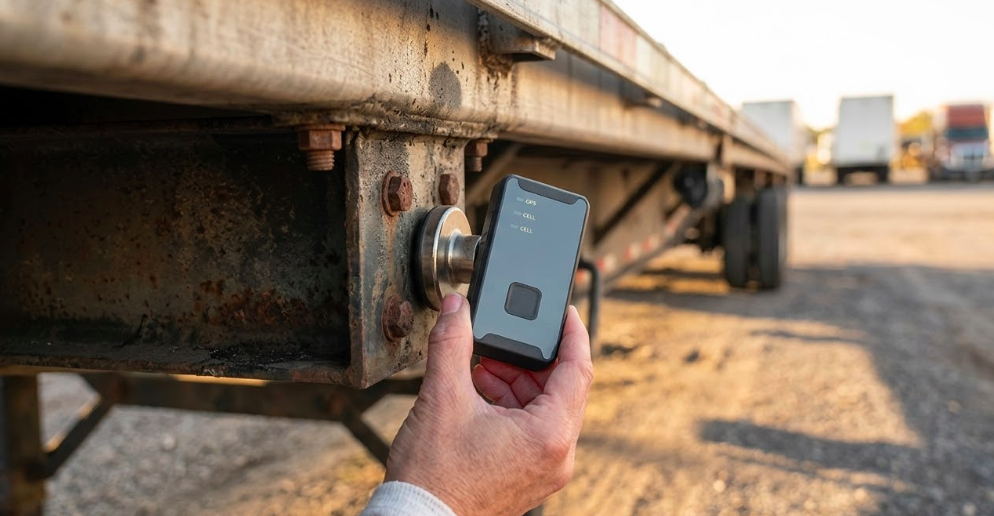
Wireless GPS trackers are fully self-contained, battery-powered units that require no connection to external power sources. These compact GPS tracking devices report location at configurable intervals over cellular networks (4G/5G) or, in some long-life models, low-power wide-area networks like NB-IoT.
Wireless devices are plug-and-play by design. Typically 2-4 inches in size, they feature strong magnets, adhesive mounts, or straps for tool-free installation. You can attach them inside cargo holds, under seats, in toolboxes, or on non-powered assets like trailers and shipping containers, anywhere that needs coverage without access to a vehicle's electrical system.
Battery life varies a lot. Small wireless trackers that send updates often may last 2 to 7 days. Bigger models with large batteries (10,000-20,000mAh) and smart update settings can run for 6 to 24 months. Some newer models can last up to 5 years on a single charge by sending updates less often and only tracking when there is movement.
Advantages of Wireless GPS Trackers
- Zero installation complexity: You can install one in minutes. No wiring, no tools, just mount it with a magnet or adhesive and you’re done. This makes it practical for small teams or anyone who doesn’t want to deal with technicians.
- Full portability across mobile assets: Moving the device between assets is just as simple. One day it’s on a trailer, the next it’s tracking a generator or a shipping container. No reinstall process, no downtime.
- Perfect for non-powered assets: They’re the go-to option for assets without power. Think flatbed trailers, storage containers, or rental equipment sitting on-site with no electrical connection.
- Discreet and flexible placement: Placement is flexible. You can hide the tracker inside cargo, behind panels, or in equipment compartments, which helps in theft-prone environments.
- Configurable battery optimization: Battery settings are adjustable. You control how often the device reports, which directly affects how long it lasts, useful when balancing visibility and maintenance effort.
Disadvantages of Wireless GPS Trackers
- Finite battery life: Depending on configuration, batteries need recharging or replacement every few weeks to several months. Neglecting this creates tracking gaps at the worst possible moments.
- Risk of accidental removal: Because devices are not permanently fixed, they can be knocked loose during asset handling or overlooked during vehicle turnover.
Wireless trackers trade continuous power and rich diagnostic data for flexibility, portability, and rapid deployment across diverse asset tracking scenarios.
Wired vs Wireless GPS Trackers
Understanding the key differences between wired and wireless GPS trackers helps match technology to operational reality. Power source, installation approach, data depth, and ideal applications all diverge significantly between wired and wireless options.
- Power and uptime: Wired GPS tracking devices leverage the vehicle's battery for unlimited operation and uninterrupted tracking. Wireless units depend on internal batteries, ranging from days of active use to months or years with optimized intervals and motion-triggered updates.
- Installation and portability: Wired tracking devices require vehicle access, specialized tools, and professional installation taking 30-90 minutes per asset. Wireless devices install in minutes and relocate freely between mobile assets.
- Data frequency and features: Wired systems support high-frequency updates (every 10-30 seconds) and advanced telemetry including engine diagnostics, fuel consumption, and harsh driving alerts. Wireless GPS trackers focus on periodic location updates, motion detection, and core geofencing.
- Tamper resistance: Both offer stealth. Wired GPS devices hide within the vehicle's wiring loom. Wireless devices tuck into unconventional locations. Wired units edge ahead since removal requires dismantling vehicle interiors.
- Total cost of ownership: Wired means higher upfront installation costs but minimal ongoing effort beyond ongoing subscription fees. Wireless means lower entry cost but recurring battery management and replacement logistics.
Most fleets today use both types. For example, they install wired trackers in trucks for full data, and use wireless trackers on trailers to keep track of everything in one system.
Side-by-Side Comparison: Wired vs Wireless GPS Trackers
|
Factor |
Wired GPS Trackers |
Wireless GPS Trackers |
|
Power Source |
Vehicle's 12V/24V electrical system |
Internal battery (2,000-20,000mAh) |
|
Installation |
Professional installation, 30-90 mins |
DIY, under 5 minutes |
|
Update Frequency |
Every 10-30 seconds (near real-time) |
Every 5-30 minutes or motion-based |
|
Key Features |
Advanced diagnostics, remote control, OBD-II port |
Core tracking, alerts, geofencing |
|
Portability |
Fixed to one asset |
Easily moved between mobile assets |
|
Tamper Resistance |
Hidden in wiring loom, very hard to remove |
Concealed, but not fixed |
|
Best Fit |
Long-term fleet, heavy equipment |
Non-powered, seasonal, rental assets |
|
Ongoing Cost |
Low maintenance, subscription only |
Battery replacements + subscription |
Use Cases for Wired GPS Trackers
Wired GPS trackers are built for vehicles that run every day. If your fleet needs live location data, fuel reports, and driver insights without ever worrying about battery, wired is your answer.
- Delivery and distribution fleets: Regional carriers and last-mile delivery operations rely on sub-minute updates, route replay, idle time reports, and fuel usage data to optimize routes, monitor routes in real time, and enhance driver safety.
- Long-haul trucking: Over-the-road carriers use wired systems for ELD compliance, accurate data on driving hours, and real-time location tracking that customers expect for shipment visibility. Fleet managers depend on this data for both compliance and route optimization.
- Construction and infrastructure: Excavators, dump trucks, cranes, and service vehicles on multi-year projects benefit from heavy equipment monitoring and vehicle diagnostics that only wired GPS tracking devices can provide.
- Public transport and school buses: Compliance requirements, passenger safety, and route adherence make wired tracking essential for bus fleets where a device suddenly running out of power simply isn't acceptable.
Use Cases for Wireless GPS Trackers
Not every asset runs on a fixed power source. Wireless GPS trackers are built for assets that move between locations, sit unpowered for days, or only need tracking for a short time. No wiring. No installation. Just place it and go.
- Detached trailers and flatbeds: Semi-trailers parked at customer sites or in yard storage for days or weeks need asset tracking without access to a vehicle's electrical system. A wireless GPS locator handles this perfectly.
- Construction site equipment: Generators, light towers, compressors, and portable cabins move between projects. Wireless units provide reliable tracking and positioning accuracy across sites without rewiring equipment.
- Rental vehicles and rental equipment: Rental operations need devices that attach and detach between hires without altering vehicle wiring, protecting warranties and simplifying turnover for both rental vehicles and heavy gear.
- High-value shipments: A wireless GPS locator traveling inside a pallet during a 10–14 day international shipment provides positioning accuracy and real-time location tracking without permanent installation.
- Personal and small-business assets: Cars, motorcycles, boats, ATVs, and valuable gear benefit from personal tracking with quick setup and the ability to move the GPS device between items as needed.
How to Choose: Key Factors to Consider in 2026
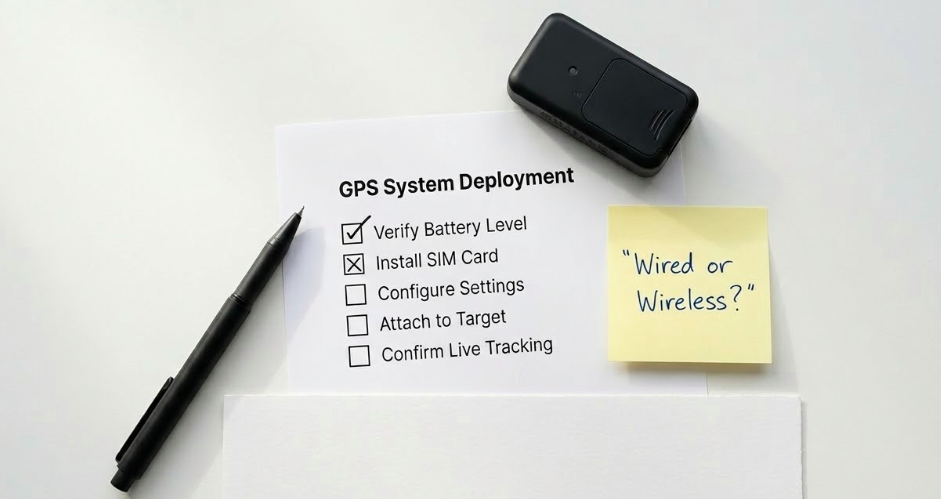
Selecting the right GPS device requires matching technology to your specific operational context. Many organizations end up deploying both plug-in devices and wireless options, so think in asset categories rather than making an all-or-nothing decision.
- Asset type and power availability: Start here. Powered vehicles and equipment can support wired GPS tracking devices. Non-powered trailers, containers, and temporary assets need wireless GPS trackers.
- Tracking intensity and real-time data needs: Do you need live, high-frequency data with driver behavior monitoring and fuel insights? Or are periodic location updates and movement alerts sufficient? The answer determines whether wired's continuous tracking justifies the investment.
- Installation resources: Can you access professional installation services, or do you need true DIY deployment? Both plug-in trackers and hardwired wired GPS tracking devices have their place depending on your technical capacity and fleet size.
- Budget and total cost of ownership: Wired setups run $150-$500 total per unit (device plus installation costs) with minimal ongoing subscription fees. Wireless devices start at $50-$300 with similar subscriptions but add battery management logistics and occasional battery replacements.
- Security requirements and vehicle theft risk: Hidden wired installations and creatively concealed wireless units both contribute to theft prevention, but wired GPS trackers are harder to fully disable and trigger alerts on removal.
Map your assets into categories, powered vs. non-powered, permanent vs. temporary and assign tracker types accordingly. This exercise transforms an abstract technology decision into a practical, scalable rollout plan.
Cost, Maintenance, and Total Ownership
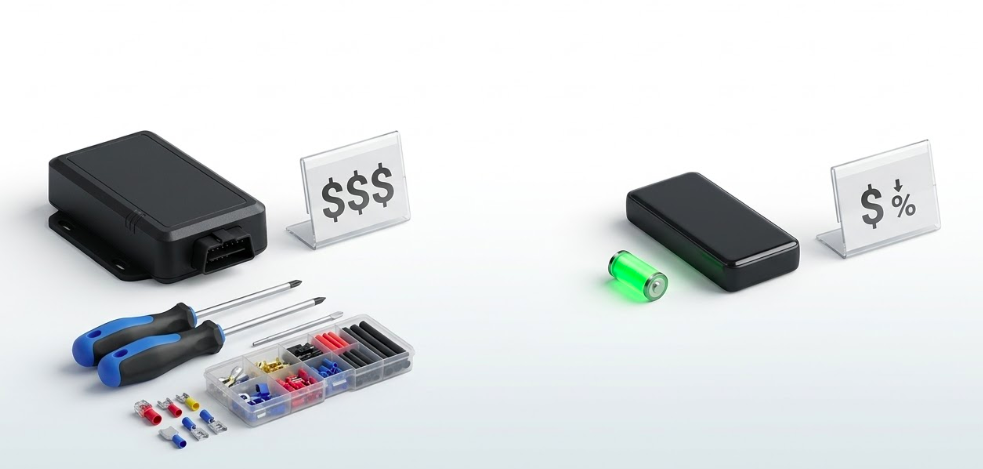
Smart buyers look beyond device pricing to understand total cost over a 3-5 year period. Installation, ongoing subscription fees, and maintenance all factor into the real equation for wired and wireless GPS tracking solutions.
Device cost: Wired GPS trackers typically range from $30-$300, depending on features and build quality. High-end telematics units can exceed $400.
Wireless trackers fall into a similar range, with larger batteries and long-life models pushing prices higher.
Installation (wired only):Professional installation usually adds $100-$250 per vehicle, depending on complexity. Hidden installs or CAN bus integration can push costs higher.
For fleets, installation also means scheduling and temporary vehicle downtime.
Monthly subscriptions: Subscription costs usually fall between $10-$30 per device, whether the tracker is wired or wireless. What changes the price is the data you need simple location tracking costs less, while advanced features like fuel monitoring and driver analytics push plans higher.
Maintenance: Wired trackers require very little ongoing attention beyond occasional checks.
Wireless devices need battery management, and this varies a lot:
- Frequent tracking: recharge every few days
- Moderate use: every few weeks
- Low-power modes: 6-24+ months
Managing batteries at scale often means tracking charge cycles, keeping spares, and avoiding downtime.
Key Insight: Wired means 'pay more now, less later', higher initial costs but minimal ongoing effort. Wireless means 'flexible now, more touchpoints later', lower upfront investment but regular battery management. Both deliver reliable tracking when deployed to the right assets.
Conclusion
By now the answer should be clear. It's not about which tracker is better, it's about which one matches your asset. Wired GPS trackers are built for vehicles that run every day. If you manage a delivery fleet, a service team, or any operation where continuous visibility, vehicle diagnostics, and driver data matter, wired is the right investment. You pay more upfront, but you get reliable tracking that never goes dark.
Wireless GPS trackers are built for everything else. Trailers, generators, rental equipment, high-value shipments, personal vehicles, anything that moves between locations or lacks a fixed power source. Quick to deploy, easy to move, and flexible enough to cover assets wired systems simply can't reach.
The most successful fleets in 2026 aren't choosing one or the other, they're using both strategically. Wire your core vehicles. Track your trailers and equipment wirelessly. Manage it all from a single GPS tracking platform.
Lightning GPS has been helping businesses and individuals make the right tracking decisions since 2006. With no long-term contracts, transparent pricing, and lifetime hardware support, the focus stays on reliability, not restrictions.
If you're ready to move from guesswork to clear, real-time visibility, the next step is choosing a solution that actually fits how your assets operate.
FAQ
Which is better, a wired or wireless GPS tracker?
Neither is universally better. Wired GPS trackers are the stronger choice for powered vehicles that run daily, they offer 24/7 real-time tracking, vehicle diagnostics, and tamper resistance. Wireless GPS trackers are better for non-powered assets, rental equipment, trailers, or any situation where you need portability and quick deployment. The right answer depends on whether your asset has a reliable power source.
What is the main difference between wired and wireless GPS trackers?
The main difference is power source. Wired GPS trackers draw power directly from the vehicle's electrical system, giving them continuous, uninterrupted tracking without battery concerns. Wireless GPS trackers run on internal batteries, making them portable and easy to install anywhere but they require periodic recharging or battery replacement.
Can a wired GPS tracker be detected or removed?
It's very difficult. Wired GPS trackers are installed inside the vehicle's electrical system, behind the dashboard, under the steering column, or within interior panels. They're hidden from plain sight and can't be removed without dismantling the vehicle interior. Most devices also send an instant tamper alert if power is cut.
Can I use both wired and wireless GPS trackers together?
Absolutely, most growing operations do exactly this. A common setup is wiring core fleet vehicles for full diagnostics and real-time tracking, while attaching wireless trackers to detachable trailers, construction equipment, and temporary assets. Many GPS platforms including Lightning GPS let you manage both types from a single dashboard.
Do wired GPS trackers need a subscription?
Yes, just like wireless trackers, wired GPS trackers require a monthly subscription to transmit real-time data over cellular networks. Most plans range from $10-$30 per device per month, depending on features. Wired trackers typically offer more advanced subscription tiers that include fuel monitoring, driver behavior data, and ELD compliance reporting.
Posted by Kellie Kendall on Mar 23rd 2026